.png)
The New Conscious Brand Leaders

Conscious brand leadership merges purpose, strategy and sincerity to drive business and impact.
By Cristian Saracco Ph.D. Founding Partner at Allegro 234

We're long past the days when leadership meant top-down decision-making and brand building was just about shiny logos and clever slogans.
In today’s post-trust, post-purpose-washing world, a new kind of leadership is emerging, one that combines integrity, empathy, business acumen and brand vision.
This is not about idealism in a tailored blazer. It is about creating real value, generating sustained income and making a positive impact, all at the same time. The conscious brand leader recognises that business and brand are not separate silos, but an ecosystem where everything is interconnected.
At its core, conscious brand leadership means that the leader embodies the brand. Their actions, behaviours, and personal narrative are in sync with the company’s brand promise.
When a brand says one thing and the CEO behaves differently, people notice. And when everything aligns? Magic happens. Or rather, trust, loyalty, and performance.
From Purpose to Profit | Building Brands with Backbone
A conscious brand always starts with a deep, grounded purpose. Not a poster on the wall, not a fluffy mission statement approved by legal.
I’m talking about a reason for existing that resonates inside and out, top to bottom. This purpose must be translated into strategy… into how the business operates, how it chooses its markets, what it says no to, and how it grows.
At Allegro 234, we often refer to this as “moving from purpose to presence”. Your brand is not just packaging; it is the living, visible expression of your strategy. It's not about pretending to care; it's about making caring part of your operations.
Take Patagonia https://www.patagonia.com - although it may sound boring, Patagonia continues to be a great example, perhaps also because of its consistency over time -. Their purpose isn't just environmental, it is existential. The founder literally gave away the company to a trust to protect the planet. Every aspect of their strategy reflects this, from material sourcing to political advocacy. The brand doesn’t just market sustainability; it institutionalises it.
On the personal side, Yvon Chouinard, the founder, wasn’t a mascot. He was the embodiment of Patagonia’s ethos: surfer, climber, rebel. His lifestyle and choices aligned with the brand’s purpose, and that congruence gave the brand its credibility.
Contrast that with BP https://www.bp.com. Remember when they rebranded as "Beyond Petroleum"? A nice logo redesign, greener typeface... but operations continued largely unchanged. The result? Cynicism, not connection. The disconnect between stated purpose and action is the fastest way to erode trust.
When Leaders Become the Brand
The conscious brand leader isn’t just a guardian of culture or ethics. They are a builder of bridges, between business objectives and social relevance, between strategy and story. Their personal brand becomes an amplifier -or underminer- of the corporate brand.
Let’s talk brand alignment. When the leader’s personal identity is consistent with the company’s brand, the result is sincere resonance. When it’s not, we get corporate whiplash.
Look at Satya Nadella at Microsoft https://www.microsoft.com. Since taking over as CEO, he’s shifted Microsoft’s image from a cold tech giant to a purpose-driven innovator focused on accessibility, inclusivity and collaboration. His leadership style -empathetic, collaborative, humble- mirrors the values Microsoft now champions. And guess what? It hasn’t hurt the bottom line. Quite the opposite.
Or consider Jessica Alba, founder of The Honest Company https://www.honest.com. Her personal commitment to non-toxic, transparent consumer products became the basis for the brand. She wasn’t just a celebrity face; she was a founder who built the business around values she personally upheld. That made the brand trustworthy, particularly to young parents seeking safer choices.
But conscious leadership also demands consistency when the spotlight fades. That means no tweeting like a warrior while exploiting labour behind the scenes.
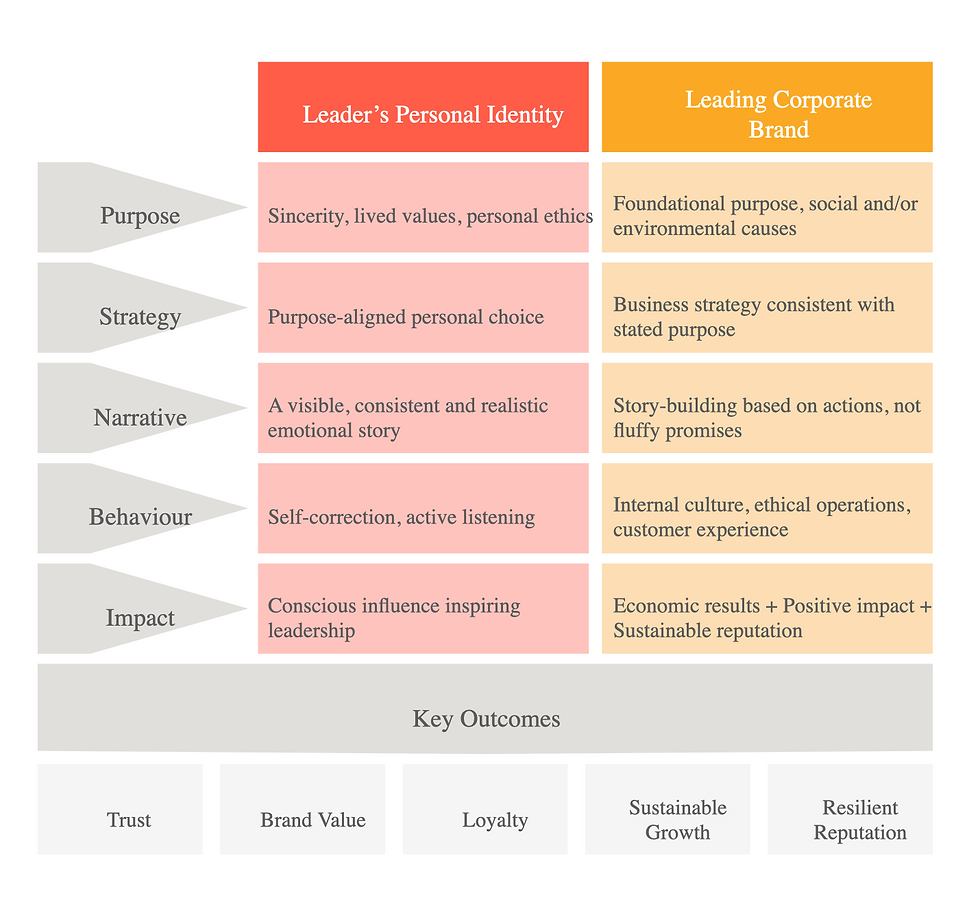
Conscious in the Chaos: Leading Through Complexity
The world is noisy. From climate breakdowns to cultural clashes, from political polarisation to AI-driven disruption, leadership today isn’t for the faint-hearted. Yet it’s in this chaos where the conscious brand leader is most needed.
One of the big shifts we’re seeing is the movement from wokeism to post-woke maturity. Brands are learning that performative virtue-signalling no longer cuts it. Audiences are smarter, faster, more sceptical. What they want is common sense, sensibility and sincerity. Not just talk. Not just hashtags. Real action.
The best leaders know when to speak and when to listen. They understand that silence can be complicit, but noise can be hollow. They root decisions in values, not trends. They take stands that align with purpose, not just with public opinion. And when they fail? They own it. They correct course. They don’t spin; they serve.
Take Paul Polman, former CEO of Unilever https://www.unilever.com. He embedded sustainability at the heart of business strategy, long before it became fashionable. He also challenged the obsession with quarterly earnings to focus on long-term value. That’s not trend-chasing; that’s guts.
Value, Impact and the Long Game
Let’s be clear: this is not about running a charity. The conscious brand leader is unapologetically here to make money. But they’re equally focused on how that money is made, and what that money fuels.
This is about building a business that performs economically, socially and ethically, what it’s called brands with a conscience. Revenue matters. So does impact. These are not trade-offs. They are intertwined.
Brands that thrive in the long run are those that are part of people’s lives. They don’t just campaign, they become rituals. Think…
• Starbucks https://www.starbucks.com: the "third space" between home and work.
• IKEA https://www.ikea.com: democratising design while pushing circular economy practices.
• Duolingo https://www.duolingo.com: a daily learning habit wrapped in humour and gamification.
These aren’t just brands. They’re behaviours. Lifestyles. And they’re led by people who get that brand strategy is not communications, it’s business. As Erich Joachimsthaler says, "brand is no longer a story you tell; it’s a system you live."


Thoughtful leadership also means being intentional about the digital tools behind a brand. Understanding how apps manage files, code, and customization can encourage more responsible decisions. For those exploring Android workflows, 🌐 https://themtmanager.com/ offers practical insights into MT Manager without making the technical side feel complicated.
Very informative read. A successful brand is created through consistency, trust, and genuine customer care. These principles are equally important in hospitality, where every guest experience shapes the brand. We strive to follow the same approach at City Center Suites, a welcoming Hotel in Bathinda Near Bus Stand.
Every parent will probably need this information at some point, so having a clear guide like this is incredibly valuable. The explanation around surat tidak hadir ke sekolah is practical, well-organized, and much more helpful than many examples I've come across online.
ball88.space mình tạt vào xem thử vì nghe bạn bè nhắc, kiểu tò mò họ làm trang ra sao thôi. Ấn tượng đầu là giao diện khá “gọn”, nhìn vào thấy họ đẩy phần sảnh lên trước nên bấm qua lại nhanh, không bị rối mắt bởi quá nhiều thứ lòe loẹt. Mình có lướt mấy đoạn nội dung thì thấy họ có nói về link vào mới và nhắc luôn chuyện dùng VPN 1.1.1.1 để vào cho ổn định, viết thẳng ý nên đọc cái là hiểu. Không phải kiểu trang cố nhồi chữ, mà chia thành từng khối ngắn, kéo xuống là gặp tiêu đề rõ ràng. Menu cũng đặt dễ thấy, các block nội dung xếp ngay…
F8BET nhà cái mình thấy bạn bè nhắc hoài nên cũng ghé thử cho biết, chủ yếu xem trang họ trình bày ra sao chứ không có ngồi “nghiên cứu” gì sâu. Lướt qua trang chủ với mấy đoạn giới thiệu, mình thấy họ chia khối nội dung khá rõ ràng, kiểu kéo xuống là biết đang ở mục nào, không bị rối mắt. Có chỗ họ để thông tin hơn 10.5 triệu thành viên nhìn khá nổi, đọc lướt cũng nắm được ý chính. Mình cũng để ý phần hỗ trợ 24 7 được đặt ngay chỗ dễ thấy nên ai cần chắc tìm nhanh. Nói chung cảm giác dùng như một trang được canh bố cục gọn, menu…